How Developers Are Building Next-Gen Apps Using Python

Python has solidified its position as a powerhouse in the world of software development, driving innovation across industries. Its simplicity, versatility, and robust ecosystem make it the go-to language for building next-generation applications. From AI-driven solutions to scalable web platforms, developers are leveraging Python to create cutting-edge applications that meet modern demands. This blog explores how developers are harnessing Python’s potential, why businesses choose to hire Python developers, and how a Python development company can bring transformative ideas to life.

Why Next-Gen Applications Are Built with Python

Python’s rise to prominence is no accident. Its clean syntax, extensive libraries, and cross-platform compatibility make it ideal for rapid development and prototyping. Here’s why developers are choosing Python for next-gen applications:

    • Versatility: Python supports a wide range of use cases, from web development (Django, Flask) to data science (Pandas, NumPy) and artificial intelligence (TensorFlow, PyTorch).

    • Scalability: Companies like Instagram and Spotify use Python to handle millions of users, proving its ability to scale.

    • Community and Ecosystem: With a vast community and thousands of libraries, Python enables developers to build complex applications quickly.

    • Readability: Python’s straightforward syntax allows teams to collaborate efficiently, reducing development time.

Businesses looking to innovate often hire Python developers to tap into this flexibility, enabling them to create apps that are both powerful and user-friendly.

How Developers Are Building Next-Gen Apps with Python

1. Artificial Intelligence and Machine Learning

Python is the backbone of AI and ML development. Libraries like TensorFlow, PyTorch, and scikit-learn empower developers to build intelligent systems, from recommendation engines to autonomous vehicles. For instance, AI-driven chatbots and predictive analytics tools are transforming customer experiences in e-commerce and healthcare.

A Python development company can help businesses integrate AI into their applications, creating personalized user experiences and automating complex processes.

2. Web Development

Frameworks like Django and Flask make Python a top choice for building robust, scalable web applications. These frameworks simplify backend development, enabling developers to focus on creating seamless user interfaces and secure APIs. Companies like Pinterest and Dropbox rely on Python for their web infrastructure.

Businesses looking to build dynamic web apps often turn to a Python development company to deliver projects that are secure, scalable, and easy to maintain.

3. Data Science and Analytics

Python’s data science libraries, such as Pandas, NumPy, and Matplotlib, are revolutionizing how businesses analyze data. Developers use Python to create dashboards, generate insights, and visualize trends, enabling data-driven decision-making. Industries like finance, retail, and marketing are leveraging Python to build next-gen analytics platforms.

To stay competitive, companies hire Python developers with expertise in data science to unlock the full potential of their data.

4. Automation and DevOps

Python is a favorite for automating repetitive tasks and streamlining DevOps workflows. Tools like Ansible and Fabric simplify infrastructure management, while Python scripts automate testing, deployment, and monitoring. This efficiency allows developers to focus on innovation rather than manual processes.

Read more-  AI in Web Security: Protecting Websites from Cyber Threats

The Role of Python Development Companies

A Python development company brings specialized expertise to the table, helping businesses navigate the complexities of modern app development. These companies offer:

    • Custom Solutions: Tailored applications that align with specific business goals.

    • Scalable Architecture: Designs that grow with your user base.

    • End-to-End Development: From ideation to deployment, ensuring a seamless process.

    • Maintenance and Support: Keeping apps updated and secure post-launch.

By partnering with a Python development company, businesses can accelerate their digital transformation and stay ahead in a competitive market.

Why Hire Python Developers?

To build next-gen apps, you need skilled professionals who understand Python’s nuances. Here’s why businesses choose to hire Python developers:

    • Expertise in Frameworks: Proficiency in Django, Flask, or FastAPI ensures high-quality code.

    • Cross-Domain Knowledge: Python developers often have experience in AI, web development, and data science.

    • Problem-Solving Skills: Python’s simplicity allows developers to focus on solving complex business challenges.

    • Agile Development: Python developers can iterate quickly, delivering MVPs and updates faster.

Whether you’re a startup or an enterprise, hiring Python developers ensures your app is built with precision and scalability in mind.

Real-World Examples of Python-Powered Apps

    • Instagram: Uses Django to handle billions of user interactions seamlessly.

    • Spotify: Leverages Python for backend services and data analysis to personalize playlists.

    • Netflix: Employs Python for recommendation algorithms and content delivery optimization.

These examples highlight Python’s ability to power apps that are both user-centric and technologically advanced.

The Future of Python in App Development

As technology evolves, Python’s role in next-gen app development will only grow. Emerging trends like serverless computing, edge computing, and quantum computing are already being explored with Python. Its adaptability ensures it will remain a cornerstone of innovation.

Businesses looking to stay ahead should consider partnering with a Python development company or choosing to hire Python developers to build apps that are future-ready.

Conclusion

Python’s versatility, scalability, and ease of use make it the ideal choice for building next-generation applications. Whether it’s AI, web development, or data analytics, Python empowers developers to create solutions that drive business success. By choosing to hire Python developers or collaborating with a Python development company, businesses can unlock the full potential of this powerful language and stay competitive in a fast-evolving digital landscape.

Ready to build your next-gen app? Start by finding the right Python expertise to bring your vision to life.
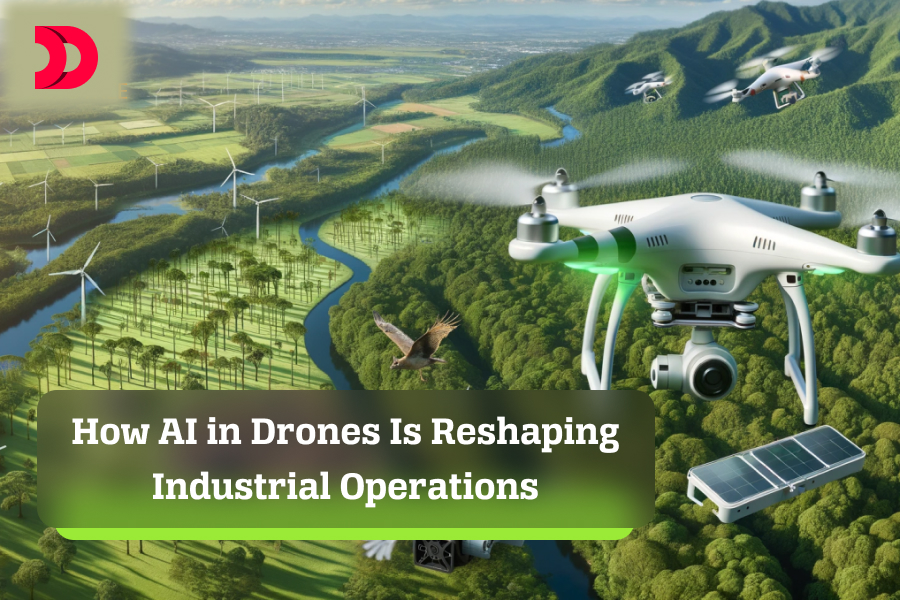
How AI in Drones Is Reshaping Industrial Operations

The fusion of artificial intelligence (AI) and drone technology has sparked a revolution in industrial operations. Drones, once limited to aerial photography or hobbyist use, are now intelligent machines capable of transforming industries like agriculture, construction, logistics, and more. With AI Development Services driving innovation, AI Development Companies are creating drones that analyze data, make autonomous decisions, and optimize workflows. This blog dives into how AI-powered drones are reshaping industrial operations, their applications, benefits, and the exciting future ahead.

What Are AI-Powered Drones?

AI-powered drones combine advanced hardware like cameras and sensors with AI algorithms, enabling them to perform tasks beyond simple flight. These drones, often developed by leading AI Development Companies, leverage technologies like machine learning, computer vision, and real-time data processing to execute complex operations with minimal human input. From navigating challenging environments to analyzing massive datasets, AI drones are redefining efficiency and precision in industries.

Key AI Capabilities in Drones

  • Computer Vision: Drones identify objects, detect anomalies, and map environments in real-time.
  • Autonomous Navigation: AI enables drones to plan routes, avoid obstacles, and operate in GPS-denied areas.
  • Data Analytics: Real-time processing of sensor data provides actionable insights for decision-making.
  • Swarm Intelligence: AI coordinates multiple drones to work together on large-scale tasks.

These capabilities, powered by AI Development Services, make drones indispensable tools for modern industries.


Read More- Top Highly Recommended AI Development Companies in London


Applications of AI in Drones Across Industries

AI drones are transforming operations across diverse sectors. Here’s how they’re making an impact:

1. Agriculture

AI drones are revolutionizing precision agriculture. Equipped with multispectral cameras and AI algorithms, they monitor crop health, detect pests, and assess soil moisture. For instance, AI can pinpoint areas needing irrigation, reducing water waste by up to 30%, according to a 2024 study. Farmers rely on AI Development Companies to build drones that optimize yields and promote sustainable practices.

2. Construction

In construction, AI drones streamline site surveys, monitor progress, and ensure safety. They capture high-resolution images and use AI to generate 3D models or detect structural defects. This reduces manual inspections in hazardous areas, cutting time by 50%, as per 2024 industry reports. AI Development Services enable drones to deliver precise data for project management.

3. Logistics and Delivery

AI drones are transforming logistics by automating inventory management and enabling last-mile delivery. In warehouses, they scan barcodes and track stock with computer vision, improving accuracy by 30%. Companies like Amazon are leveraging AI Development Services to deploy drones that navigate urban environments for faster deliveries, reducing costs by 25%, according to 2024 logistics data.

4. Energy and Utilities

AI drones inspect power lines, wind turbines, and solar panels, identifying issues like overheating components through thermal imaging. This minimizes downtime and enhances safety by reducing human exposure to risky environments. A 2023 energy report noted that drone inspections cut maintenance costs by 20%.

5. Mining

In mining, AI drones survey sites, monitor equipment, and assess environmental impacts. They create detailed topographical maps and detect hazards like unstable terrain, improving safety and cutting survey times by 40%, as per a 2024 mining study. AI Development Companies are key to developing these robust systems.

6. Disaster Management

AI drones aid in disaster response by mapping affected areas, delivering supplies, and locating survivors. Their ability to operate in hazardous conditions makes them invaluable for search-and-rescue missions. AI-driven analytics help prioritize response efforts, saving lives and resources.

Benefits of AI-Powered Drones

AI drones, backed by innovative AI Development Services, offer transformative benefits:

  • Efficiency: Automating tasks like inspections and data collection saves time and labor.
  • Safety: Drones handle dangerous tasks, reducing risks to human workers.
  • Cost-Effectiveness: Optimized resource use and reduced errors lower operational costs.
  • Real-Time Insights: AI processes data instantly, enabling faster decision-making.
  • Scalability: Drone fleets, coordinated by AI, handle large-scale operations seamlessly.

Challenges of AI in Drones

Despite their potential, AI drones face hurdles:

  • Regulations: Strict aviation laws limit drone operations in many regions.
  • Privacy Concerns: Data collection raises privacy and security issues, requiring robust cybersecurity from AI Development Companies.
  • Cost: High initial investment in AI and drone hardware can be a barrier.
  • Technical Limits: Battery life and payload capacity restrict some applications.

The Future of AI in Drones

The future of AI-powered drones is promising, with AI Development Services driving innovation. Key trends include:

  • Swarm Technology: Coordinated drone fleets for tasks like disaster response or large-scale monitoring.
  • Edge AI: Onboard data processing for faster, cloud-independent operations.
  • IoT Integration: Drones connecting with IoT ecosystems for seamless data sharing.
  • Enhanced Autonomy: AI enabling drones to make complex decisions independently.

By 2030, the global drone market is expected to hit $63 billion, with AI applications at the forefront, per a 2024 forecast.

Why Choose an AI Development Company?

To harness the full potential of AI drones, partnering with a skilled AI Development Company is crucial. These companies offer tailored AI Development Services to build drones with advanced features like autonomous navigation, real-time analytics, and swarm coordination. Their expertise ensures drones meet industry-specific needs, from agriculture to logistics, while addressing challenges like regulatory compliance and data security.

Conclusion

AI-powered drones are reshaping industrial operations by automating tasks, enhancing safety, and delivering real-time insights. From agriculture to disaster management, their applications are vast and growing, thanks to AI Development Services and AI Development Companies. While challenges like regulations and costs persist, the future is bright with advancements in swarm technology and edge AI. As industries embrace these intelligent machines, AI drones will continue to redefine efficiency and innovation in the industrial landscape.

Is React Native App Development Cost-Effective? Here’s What You Should Know

In the fast-paced world of mobile app development, businesses are constantly seeking ways to build high-quality apps efficiently and affordably. React Native, an open-source framework developed by Facebook, has emerged as a popular choice for creating cross-platform mobile applications. But is React Native app development truly cost-effective? In this blog, we’ll explore the factors that influence React Native development costs, its benefits, and how it compares to other approaches, helping you decide if it’s the right choice for your project.

What is React Native?

React Native is a JavaScript-based framework that allows developers to build mobile apps for both iOS and Android using a single codebase. By leveraging React’s component-based architecture, it enables faster development and delivers a near-native user experience. Companies like Facebook, Instagram, Airbnb, and Walmart have successfully used React Native, proving its reliability for large-scale applications.

Factors Influencing React Native App Development Costs

The cost of developing a React Native app depends on several factors. Understanding these can help you estimate your budget accurately:

  • App Complexity: Simple apps (e.g., informational apps or calculators) cost less than complex ones with features like real-time chat, payment gateways, or video streaming. A basic app might take 500–1,000 hours, while a feature-rich app could require 2,000+ hours.
  • Design Requirements: Custom UI/UX designs with animations or intricate layouts increase costs. Using pre-built component libraries like React Native Elements can reduce design expenses.
  • Development Team Rates: Costs vary by region:
    • North America/Europe: $50–$150/hour
    • Asia (e.g., India): $20–$50/hour
    • Eastern Europe: $30–$70/hour
  • Third-Party Integrations: APIs for payments (e.g., Stripe), maps (e.g., Google Maps), or analytics (e.g., Firebase) may involve licensing fees or additional development time.
  • Maintenance and Updates: Post-launch maintenance, bug fixes, and updates typically cost 15–20% of the initial development budget annually.
  • App Store Fees: Publishing on the App Store ($99/year for Apple) and Google Play ($25 one-time) adds minor costs.

For a minimum viable product (MVP), React Native app development costs typically range from $15,000 to $80,000, depending on complexity and team location. Complex apps with advanced features can exceed $100,000.

Why is React Native Considered Cost-Effective?

React Native’s cost-effectiveness stems from its unique advantages, which reduce development time and resources compared to native or other cross-platform frameworks.

Single Codebase for iOS and Android

Unlike native development (Swift for iOS, Kotlin for Android), which requires separate codebases, React Native allows developers to write one codebase that works on both platforms. This can save 30–40% of development time, significantly lowering costs. For example, a native app costing $100,000 for both platforms might cost $60,000–$70,000 with React Native.

Read More- Why Every Business Needs App Maintenance and Support

Faster Development with Hot Reloading

React Native’s hot reloading feature lets developers see changes instantly without recompiling the entire app. This speeds up debugging and iteration, reducing development hours and costs.

Reusable Components

React Native’s component-based architecture allows developers to reuse code across different parts of the app or even other projects. Libraries like React Navigation or Redux further streamline development, minimizing custom coding.

Large Community and Ecosystem

As an open-source framework, React Native has a vast community of developers contributing plugins, libraries, and tools. This reduces the need to build features from scratch, saving time and money. For instance, free libraries like Axios for API calls or React Native Maps for geolocation cut development costs.

Lower Maintenance Costs

Since React Native apps use a single codebase, updates and bug fixes are applied once for both platforms, reducing maintenance efforts compared to native apps, which require dual updates.

Comparing React Native to Other Frameworks

To understand React Native’s cost-effectiveness, let’s compare it with native development and other cross-platform frameworks like Flutter and Xamarin.

  • Native Development (Swift/Kotlin):
    • Pros: Superior performance, full access to platform-specific features.
    • Cons: Requires separate codebases, doubling development time and costs. A native app might cost $80,000–$150,000 for both platforms.
    • Best For: Apps needing maximum performance (e.g., gaming or AR/VR).
  • Flutter (Google’s Framework):
    • Pros: Fast performance, rich widget library, single codebase.
    • Cons: Larger app size, smaller community than React Native. Costs are similar to React Native ($15,000–$80,000 for an MVP), but finding Flutter developers may be pricier due to lower availability.
    • Best For: Apps with complex UI animations.
  • Xamarin (Microsoft’s Framework):
    • Pros: Native-like performance, C#-based.
    • Cons: Slower development, higher licensing costs for enterprise features. Costs often range from $20,000–$100,000 for an MVP.
    • Best For: Enterprises already using Microsoft ecosystems.

React Native strikes a balance between cost, speed, and performance, making it a cost-effective choice for most startups and mid-sized businesses.

Potential Drawbacks to Consider

While React Native is cost-effective, it’s not without limitations:

  • Performance: For CPU-intensive apps (e.g., video editing or 3D gaming), native development may outperform React Native.
  • Platform-Specific Code: Some features (e.g., in-app purchases) may require native modules, adding development time.
  • Dependency on Third-Party Libraries: Over-reliance on community libraries can lead to compatibility issues during updates.

To mitigate these, work with experienced developers who can optimize performance and handle platform-specific requirements efficiently.

Tips to Maximize Cost-Effectiveness with React Native

To get the most value from React Native development:

  • Start with an MVP: Focus on core features to launch quickly and test the market, keeping initial costs low.
  • Use Pre-Built Libraries: Leverage tools like React Native Paper or NativeBase for UI components to save design time.
  • Hire Experienced Developers: Skilled React Native developers can avoid common pitfalls, reducing debugging costs.
  • Outsource Strategically: Consider developers in cost-effective regions like India or Eastern Europe, but ensure they have a proven track record.
  • Plan for Scalability: Design the app architecture to handle future features, minimizing costly rewrites.

Real-World Examples

Many companies have saved costs with React Native:

  • Instagram: Integrated React Native into its existing app, reducing development time for new features.
  • Walmart: Rebuilt its app with React Native, achieving near-native performance at a lower cost than native development.
  • Bloomberg: Used React Native to deliver a consistent user experience across iOS and Android, cutting development time by 30%.

These success stories highlight React Native’s ability to deliver quality apps affordably.

Conclusion

React Native app development is highly cost-effective for most businesses, thanks to its single codebase, fast development cycle, and rich ecosystem. While costs for an MVP typically range from $15,000 to $80,000, the framework’s ability to save 30–40% compared to native development makes it an attractive choice. However, consider your app’s complexity and performance needs, as React Native may not suit highly specialized projects.

By starting with an MVP, leveraging pre-built libraries, and hiring skilled developers, you can maximize React Native’s cost benefits. If you’re looking to build a cross-platform app on a budget, React Native is a smart choice that balances affordability, speed, and quality.

Ready to start your React Native project? Dive in and bring your app idea to life!

AI in Web Security: Protecting Websites from Cyber Threats

As cyber threats grow more sophisticated, websites face unprecedented risks. From data breaches to DDoS attacks, cyber threats are growing in sophistication and frequency. Enter Artificial Intelligence (AI)—a game-changer in web security. AI is revolutionizing how we protect websites by detecting threats faster, predicting risks, and automating defenses. In this blog, we’ll explore how AI strengthens web security, its key applications, and why it’s essential for safeguarding your online presence.

Why Web Security Matters More Than Ever

Websites are the backbone of businesses, e-commerce platforms, and personal brands. However, cybercriminals exploit vulnerabilities like weak passwords, outdated software, or phishing schemes to gain unauthorized access. According to a 2024 report by Cybersecurity Ventures, cybercrime costs are projected to hit $10.5 trillion annually by 2025. The stakes are high, and traditional security measures often struggle to keep up with evolving threats.

AI steps in where traditional methods fall short. By leveraging machine learning (ML), predictive analytics, and real-time monitoring, AI empowers website owners to stay one step ahead of attackers. Let’s dive into how AI is transforming web security.

Key Ways AI Enhances Web Security

1. Real-Time Threat Detection

AI-powered systems analyze massive amounts of data in real time to identify suspicious activity. Unlike rule-based systems, AI learns from patterns and anomalies, detecting threats like malware, SQL injections, or brute-force attacks faster than human monitoring.

  • Example: AI tools like Cloudflare’s Bot Management use ML to distinguish between legitimate users and malicious bots, reducing false positives and improving accuracy.
  • Benefit: Faster detection minimizes damage and prevents breaches before they escalate.

2. Predictive Threat Intelligence

AI doesn’t just react—it predicts. By analyzing historical data and global threat trends, AI identifies potential vulnerabilities and anticipates attack vectors. This proactive approach helps websites patch weaknesses before they’re exploited.

  • Example: Platforms like Darktrace use AI to map a website’s “normal” behavior, flagging deviations that could signal an attack.
  • Benefit: Predictive insights allow businesses to prioritize resources and strengthen defenses proactively.

3. Automated Incident Response

When a threat is detected, speed is critical. AI automates responses like blocking IP addresses, isolating compromised systems, or deploying patches. This reduces the need for manual intervention, saving time and resources.

  • Example: AI-driven Web Application Firewalls (WAFs) like Imperva automatically update rules to counter new attack patterns.
  • Benefit: Automation ensures rapid response, even during off-hours or high-traffic attacks like DDoS.

4. Enhanced User Authentication

AI strengthens user authentication by analyzing behavioral biometrics, such as typing patterns or mouse movements, to verify identities. This adds a layer of security beyond passwords or two-factor authentication.

  • Example: BioCatch uses AI to create unique user profiles, detecting fraud if login behavior deviates from the norm.
  • Benefit: Reduces account takeovers and enhances user trust.

Read more– Challenges in Building AI-Powered Websites and How to Overcome Them

5. Phishing and Fraud Detection

Phishing attacks trick users into sharing sensitive data or clicking malicious links. AI scans emails, URLs, and website content for phishing red flags, such as suspicious domains or unusual language patterns.

  • Example: Google’s Safe Browsing uses AI to flag malicious URLs, protecting millions of users daily.
  • Benefit: Keeps users safe and preserves your website’s reputation.

Challenges of Implementing AI in Web Security

While AI offers powerful solutions, it’s not without challenges:

  • Cost: Advanced AI tools can be expensive, especially for small businesses.
  • Complexity: Implementing AI requires expertise to integrate and maintain systems.
  • False Positives: Overzealous AI may flag legitimate users as threats, requiring fine-tuning.
  • Adversarial AI: Cybercriminals use AI to create smarter attacks, like deepfake phishing or AI-generated malware.

To overcome these, businesses should partner with reputable security providers and regularly update AI models to stay ahead of evolving threats.

How to Integrate AI into Your Website’s Security

Ready to leverage AI for web security? Here’s a quick roadmap:

  1. Assess Your Needs: Identify your website’s vulnerabilities (e.g., e-commerce transactions, user data storage).
  2. Choose AI-Powered Tools: Opt for trusted solutions like Cloudflare, Imperva, or Darktrace, depending on your budget and requirements.
  3. Train Your Team: Ensure staff understand how to monitor and manage AI tools effectively.
  4. Monitor and Update: Regularly review AI performance and update systems to counter new threats.
  5. Combine with Traditional Security: Use AI alongside firewalls, SSL certificates, and regular audits for a layered defense.

The Future of AI in Web Security

AI is only getting smarter. As machine learning algorithms evolve, we can expect even more precise threat detection, adaptive defenses, and seamless user experiences. Emerging trends like zero-trust architecture and AI-driven encryption will further bolster web security. However, staying vigilant is key—cybercriminals are also adopting AI, creating a constant race to innovate.

Conclusion

AI is transforming web security by offering faster, smarter, and more proactive protection against cyber threats. From real-time threat detection to automated responses, AI empowers website owners to safeguard their digital assets and build user trust. By integrating AI into your security strategy, you’re not just reacting to threats—you’re staying ahead of them.

Want to secure your website with AI? Start by exploring AI-powered tools and consulting with cybersecurity experts to tailor a solution for your needs. Protect your online presence today and thrive in a safer digital world.

Have questions about AI in web security or need help choosing the right tools? Contact now- Devstree

Create a Meditation App Like Headspace: Step-by-Step Guide

The rise of meditation apps like Headspace and Calm has made mindfulness more accessible than ever. With the global wellness market projected to hit $14.5 billion by 2030, according to a 2025 Grand View Research report, launching your own meditation app is a timely opportunity. Whether you’re a developer, entrepreneur, or passionate about mental health, this blog offers a clear, step-by-step guide to building a meditation app that inspires calm and captures a growing audience.

Why Launch a Meditation App?

Meditation apps are booming as people seek tools to manage stress, improve sleep, and boost focus. A well-designed app can empower users to prioritize mental health while offering you a chance to build a profitable business. By blending technology with wellness, you can create a platform that stands out in a competitive market. Let’s break down the process into manageable steps.

Step 1: Craft Your App’s Vision

Start by defining what makes your app unique. Will it cater to beginners, focus on specific needs like anxiety relief, or target niche audiences like students or parents? A clear vision guides your features and branding.

  • Consider features like guided meditations, sleep aids, progress tracking, or community challenges.
  • Research competitors like Headspace and Insight Timer to identify gaps you can fill.

Next Step: Brainstorm a unique selling point, such as short sessions for busy professionals or culturally tailored content.

Step 2: Research Your Audience

Understanding your users is key to creating a relevant app. Conduct surveys, analyze social media trends, or explore discussions on platforms like X to uncover what meditators want—be it quick sessions or sleep-focused content.

  • Use tools like Google Trends to find popular meditation keywords for SEO.
  • Identify pain points, such as lack of beginner-friendly content or affordable subscriptions.

Next Step: Create user personas to guide your app’s design and marketing.

Step 3: Select a Technology Stack

A robust tech stack ensures your app is fast, scalable, and user-friendly. Here’s a recommended setup for a meditation app:

  • Frontend: React Native or Flutter for iOS and Android compatibility.
  • Backend: Node.js with Express or Django for server management.
  • Database: MongoDB or PostgreSQL for user and content storage.
  • Cloud: AWS or Firebase for hosting and notifications.
  • Audio Streaming: AWS S3 or SoundCloud API for smooth playback.
  • Security: OAuth or Firebase Authentication for safe logins.

Next Step: Consult developers to align your tech choices with budget and goals.

Step 4: Design a Calming User Experience

A meditation app should feel intuitive and soothing. A clean, accessible design enhances user engagement and supports mindfulness.

  • Use soft colors (e.g., blues, pastels) and simple navigation.
  • Ensure accessibility with adjustable fonts and voice controls.
  • Add subtle animations for a calming effect, like gentle transitions.

Next Step: Use Figma or hire a UI/UX designer to create wireframes and test prototypes.

Read MoreHow to Make an E-Learning App Like Coursera in 8 Simple Steps

Step 5: Build Core Features

Development brings your app to life. Work with your team to code the frontend, backend, and integrations, prioritizing features in phases:

  • Phase 1: User login, profiles, and basic meditation playback.
  • Phase 2: Personalization, offline access, and analytics.
  • Phase 3: Notifications, subscriptions, and social features.

Next Step: Adopt Agile development with regular testing to stay on track.

Step 6: Create Engaging Content

High-quality content is the soul of your app. Collaborate with meditation experts, voice artists, or sound designers to produce professional audio and video.

  • Offer diverse sessions: 5-minute mindfulness, stress relief series, or ambient sounds.
  • Include sleep stories or focus-enhancing soundscapes for variety.

Next Step: Source talent via platforms like Upwork or record in a professional studio.

Step 7: Choose a Monetization Model

A smart revenue strategy ensures sustainability. Consider these options:

  • Freemium: Free basic access with premium subscriptions for exclusive content.
  • Subscriptions: Monthly or annual plans (e.g., $9.99/month).
  • In-App Purchases: Sell meditation packs or courses.
  • Ads: Optional, non-disruptive ads for free users.

Next Step: Integrate Stripe or PayPal and test payment flows for seamless transactions.

Step 8: Test and Launch

Rigorous testing ensures a polished app. Check functionality, performance, and usability across devices.

  • Test audio streaming, offline mode, and user authentication.
  • Use TestFlight (iOS) or Google Play Beta (Android) for beta testing.

Next Step: Address feedback and launch on the App Store and Google Play.

Step 9: Market Your App

Visibility drives downloads. Build a marketing plan to reach your audience effectively.

  • Optimize app store listings with keywords like “meditation app” and “mindfulness.”
  • Share wellness tips on Instagram, TikTok, or X to build a community.
  • Write blog posts on meditation benefits to attract organic traffic.
  • Partner with influencers or run targeted ads on Google or Meta.

Next Step: Launch with a free trial campaign to boost initial sign-ups.

Step 10: Iterate Based on Feedback

Post-launch, listen to users to refine your app. Use analytics and reviews to identify improvements.

  • Track behavior with Firebase Analytics.
  • Collect input via in-app surveys or app store reviews.

Next Step: Release updates with new content and features to retain users.

Overcoming Common Challenges

Building a meditation app comes with obstacles:

  • Competition: Differentiate with unique content or niches.
  • Content Costs: Budget for professional audio production.
  • Retention: Engage users with fresh sessions and reminders.
  • Tech Issues: Prioritize reliable streaming and security.

Solution: Focus on user needs, plan finances, and work with skilled developers.

What’s Next for Meditation Apps?

The future is bright, with trends like AI-driven personalization, wearable integrations, and gamified challenges shaping the industry. By staying innovative, your app can lead the wellness revolution.

Final Thoughts

Creating a meditation app like Headspace is an exciting journey that blends technology and well-being. By following these steps—defining your vision, building with care, and marketing strategically—you can launch an app that helps users find peace and grows your business. Start today, and bring mindfulness to the world.

Want to kickstart your meditation app? Research your audience or connect with developers to turn your idea into reality. Let’s create something transformative!